by Dimitra Kasdagli
Greece–Türkiye Tensions Escalate Amid Regional Military Realignments
Greece and Türkiye are experiencing renewed tensions in the Aegean and Eastern Mediterranean, as military deployments, competing maritime claims and expanding regional defense agreements reshape the security landscape. Recent developments involving Greece, Cyprus, Türkiye, Israel, Saudi Arabia and Pakistan highlight the growing complexity of regional relations amid conflicts in the Middle East and Eastern Europe.
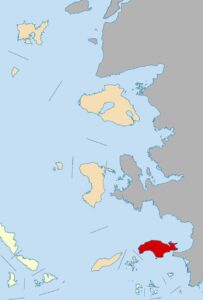
According to media reports, Türkiye relocated approximately 2,000 professional commandos of its 51st Commando Brigade from eastern Türkiye to Söke, in Aydın province, opposite the Greek island of Samos, at the end of August. Although the Turkish Defense Ministry stated that the deployment had been approved in June, it publicly addressed the move following Greek Prime Minister Kyriakos Mitsotakis’ September 12 visit to Kastellorizo, Greece’s easternmost island, located approximately one mile from the Turkish coast.
Ankara expressed concern over Mitsotakis’ contacts with military units stationed on the island, reiterating its position that Kastellorizo must remain demilitarized. Athens, meanwhile, maintains that it has the right to defend its territory.
Tensions intensified further on September 20, when the Turkish Navy launched the Denizkurdu-I/2026 military exercise across the Black Sea, Sea of Marmara, Aegean and Eastern Mediterranean. Turkish Foreign Minister Hakan Fidan accused Athens of escalating tensions ahead of anticipated Greek elections in spring 2027 and warned against what he described as “adventurist” actions.
The underlying disputes include competing interpretations of the 1923 Treaty of Lausanne and the 1947 Treaty of Paris, maritime boundaries and territorial waters. Greece maintains its right under international law to extend its territorial waters to 12 nautical miles, while Türkiye considers such an extension in the Aegean a potential Casus Belli, following a 1995 Turkish parliamentary resolution.
Ankara is also advancing legislation based on its “Blue Homeland” maritime doctrine, with a proposed Maritime Jurisdiction Areas Law expected to be presented to the Turkish parliament in October. In August, Türkiye announced new marine parks in the Aegean and Eastern Mediterranean, including areas between Lemnos and Samothrace and off Fethiye and Kaş.
Expanding Defence Cooperation and Military Capabilities
The renewed tensions are unfolding alongside a broader expansion of military cooperation and defence spending across the region.
Greece has strengthened its military capabilities through cooperation with NATO and the United States. The port of Alexandroupoli has become an important logistical hub for military supplies supporting Ukraine, while the Souda Bay base in Crete remains a significant component of US military infrastructure in the Eastern Mediterranean.
Athens has also expanded its air force with Rafale and upgraded F-16 Viper aircraft, while preparing to receive 20 F-35 fighter jets in 2028–29. In early September, Mitsotakis described Greece’s modernized air capabilities as providing a “very significant advantage” over Türkiye.
Türkiye, meanwhile, remains excluded from the F-35 program following its acquisition of Russia’s S-400 air defense system in 2019, which also triggered US sanctions under the CAATSA legislation.
Against this backdrop, Ankara is expanding its own regional defense partnerships. On August 31, Türkiye, Saudi Arabia and Pakistan held the first meeting of their Mecca Defense Alliance in Istanbul. The agreement, following the NATO’s collective-defense framework, provides for a joint response in the event of an armed attack against any of the three countries. This happens while Greece is expanding its defense cooperation with Cyprus and Israel.
On September 19, Fidan stated that Türkiye was prepared to provide technical military assistance to Saudi Arabia, as regional security concerns involving Yemen and the wider Middle East continue to develop.
Greece, Israel, Cyprus and the Eastern Mediterranean
At the same time, Greece is deepening its defense relationship with Israel. On August 31, the two countries signed the approximately €3 billion “Achilles Shield” agreement, under which Israel will supply air defense systems to Greece, while Rafael will develop the Greek military’s national command-and-control network.
The agreement builds on existing trilateral cooperation between Greece, Cyprus and Israel in defense, energy and economic affairs.
Türkiye’s growing cooperation with Saudi Arabia and Pakistan, alongside Greece’s expanding military partnership with Israel, reflects the emergence of overlapping regional alliances. These developments are taking place amid heightened tensions involving Iran, Israel and other regional actors.
Turkish President Erdoğan, addressing the United Nations General Assembly on September 22, criticized Israel’s actions in Gaza while expressing support for US President Donald Trump’s efforts toward a ceasefire. Meanwhile, tensions between Türkiye and Israel have continued to intensify over regional security and the conflicts involving Iran and Syria.
President Erdoğan omitted to mention that Türkiye for the past 52 years is occupying about 1/3 of the island of Cyprus as a result of the 1974 illegal Türkiye invasion of Cyprus.
Maritime Disputes and the Great Sea Interconnector
Competition over maritime jurisdiction, energy resources and strategic influence in the Eastern Mediterranean remains another major source of friction.
Türkiye’s 2019 maritime agreement with Tripoli, Libya, established overlapping maritime claims that Greece, Cyprus and other regional actors dispute. The agreement also challenged plans for the EastMed gas pipeline involving Greece, Cyprus and Israel.
These competing interests have previously brought NATO allies into direct confrontation. In June 2020, French and Turkish naval vessels faced off in the Mediterranean amid disagreements over Libya.
Greece and France subsequently strengthened their defense partnership through a 2021 agreement providing for mutual military assistance in the event of an armed attack. The agreement accompanied major French defense sales to Greece, including Belharra frigates and Rafale fighter jets.
More recently, reports in the Greek press have highlighted concerns over potential Turkish interference with survey work for the Great Sea Interconnector (GSI), the proposed electricity link connecting Greece, Cyprus and Israel.
According to Ta Nea, Athens has developed a three-stage contingency plan that includes seeking support from the United States, the European Commission, NATO and France. The most serious scenario reportedly envisages the deployment of the Greek Navy in response to Turkish warships.
As Greece and Türkiye continue to pursue competing maritime, energy and security interests, developments in the Aegean and Eastern Mediterranean remain closely connected to wider regional military realignments.